
A Note from the Composer
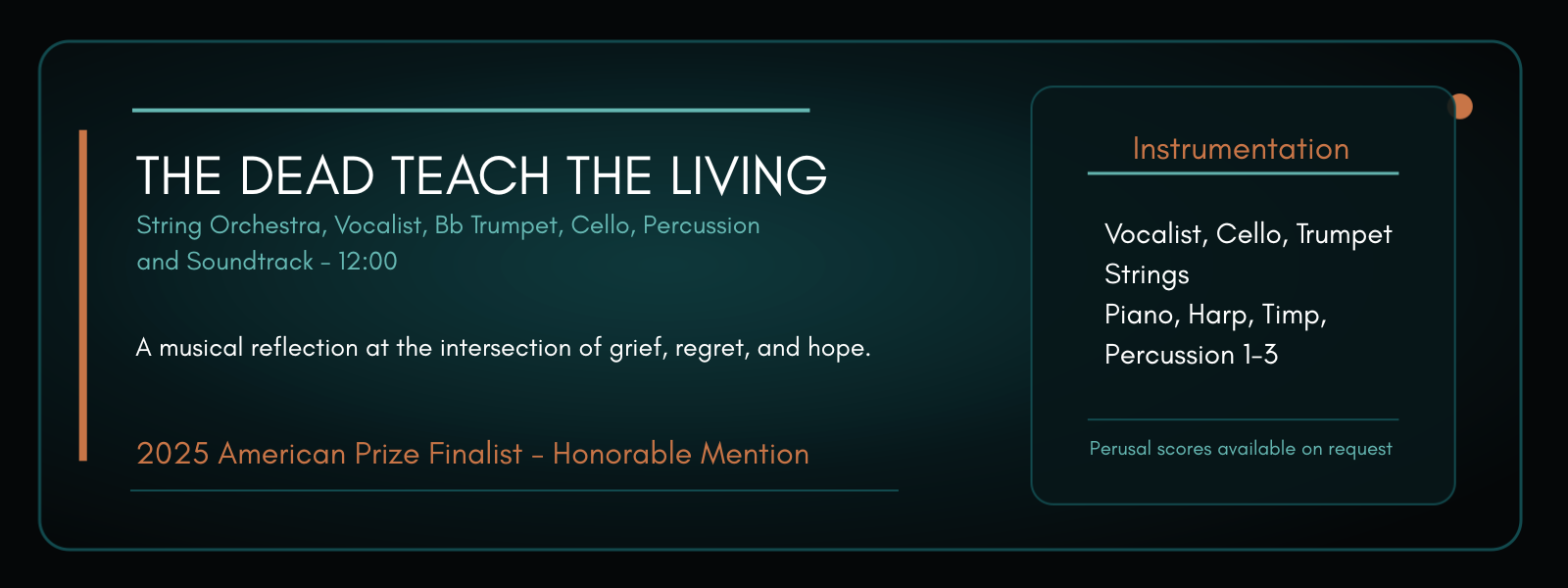
“The Dead Teach the Living” (2024) was written, in part, as the composer's response to the sudden loss of his father in late 2021. It is the musical encapsulation of his own grieving process, including the many emotional experiences which followed as his affairs were set in order over the course of several years. This los closely followed the loss of one of the composer's good friends in 2020 during the Covid-19 pandemic, which prevented travel for celebration of life gatherings or funeral attendance.
What do the dead teach the living? It’s different for everyone, but in death we expose all of those things about ourselves which in life we are able to keep private and hidden. In death, all of our life’s work, in its ending, is submitted to the world for affirmation, criticism, or appreciation. In death, we leave behind lessons for those who follow. Humans are by nature imperfect, and many amongst us can be defined, lauded, condemned and celebrated for those imperfections which are, however, the details of our lives which bring us closest to our own humanity.
This piece is not autobiographical, though my own grief certainly lives within these notes, as does the potential for the future which can exist. There are three solo voices which are employed throughout the piece at certain moments who are all characterized by differing intentions. The Cello represents regret, as death removes the possibility of absolution for unspoken words or uncommitted deeds. The soprano represents grief, as the survivors struggle to find the words to express and process their loss. The trumpet represents hope, as there is infinite possibility which lives within us all…if we choose to accept it.
JN